2009年12月28日 星期一

hegamony coming

Taipei Times - archives

http://help.funp.com/lib/exe/fetch.php/funp/tools/tools_postbtn_script.png?cache=cache

It is no small irony that the visit last week of Association for Relations Across the Taiwan Strait (ARATS) Chairman Chen Yunlin (陳雲林) would bring to the fore a potentially damaging rift within the Chinese Nationalist Party (KMT).

No sooner had Chen returned to China than the party’s old guard — personified by former KMT chairman Lien Chan (連戰) and People First Party (PFP) Chairman James Soong (宋楚瑜) — accused the Straits Exchange Foundation (SEF) and President Ma Ying-jeou (馬英九) of mishandling a decision to avoid holding major banquets for Chen.

Then a newspaper alleged that SEF officials had referred to Chen as a “C-list” politician whom “A-listers” Soong, Lien and former KMT chairman Wu Poh-hsiung (吳伯雄) had desperately sought to meet. SEF Chairman Chiang Pin-kung (江丙坤) denied such a comment had been made, but the damage was done.

2009年12月18日 星期五

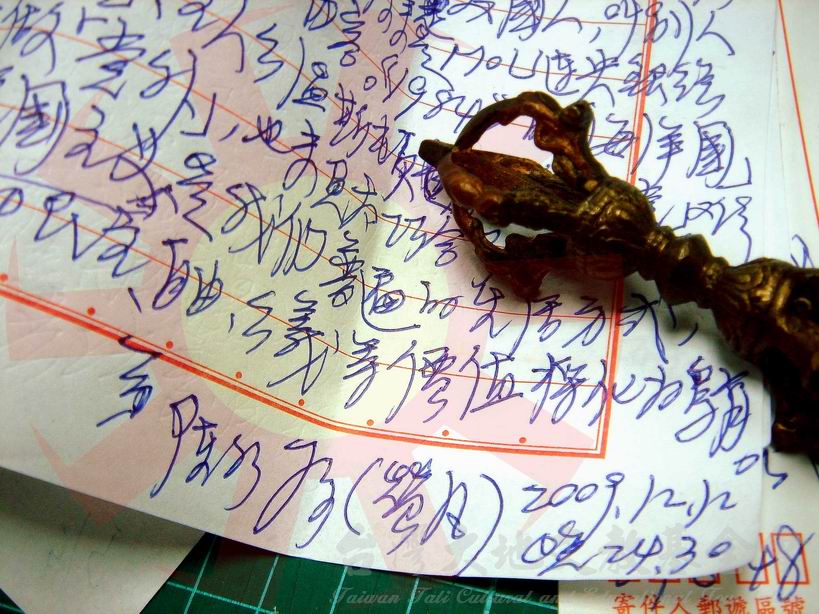
阿扁總統給楊緒東醫師的回信(第12封)

阿扁總統給楊緒東醫師的回信(第12封) 列印
新聞報導 - 自由論壇
作者 陳水扁總統 | 贊凡   
2009/12/18, Friday

(請點選上列小圖,觀看大圖)
楊董事長、光贊同修您好!

12月4日&9日的來信收悉。祝Australia之旅順風、平安、如意。

想不到身為閣揆會說搞台獨的人是白痴的 話,儘管後來收回「或白痴」三個字,硬拗是不必要的贅語。但台灣的前途,在民主自由的國度,特別多元社會有不同的選項都應獲得尊重,您可以有自己的政治信 仰和不同主張,卻不能指摘意見不一樣的人是不負責任的「白痴」。這就是憲法所保障的意見表現自由。馬英九競選總統時的文宣說,台獨是台灣的選項,但不是中 國國民黨的選項。而對很多台灣人而言,台獨主張不僅是信仰,更是台灣的活路。

我在下一期12月16日出刊的蓬萊島雜誌.net阿扁札記,寫「選舉輸贏不是民進黨的一切」,呼籲中國欽差大臣陳雲林12月21日來台中出席第四次「江陳會」時,台灣人民應向全世界宣示「台灣中國,一邊一國」、「拒絕接受ECFA」兩大訴求,表達堅定「拒統保台」的意志和決心。

光贊同修提到我的case經過一番沉澱過濾之後,會有「澄清」的一天,此時此刻了解到我被政治迫害的事實會成為「共識」。又說有法界人士向您 complain扁案會是一場「難於自圓其說」「上下不得的案件」,他們最怕touch此種非案之案,小英應該知道「政治迫害」的事實了吧;不應該還談一 些不痛不癢的「司法人權迫害」。遠的不說,馬騜在12月9日於中國國民黨檢討三合一選舉敗選原因的中常會上,竟然把敗選責任推給扁案辦得太慢及檢察總長陳聰明沒有下台。公然把手伸進法院,干涉司法審判,一點都不遮掩。

而12月10日世界人權日也是美麗島事件30週年,馬騜驕傲的表示把兩項世界人權公約正式國內法化,殊不知前一天他才在中國國民黨公開說出違背司法審判獨立的違憲談話;還有30年前美麗島事件發生時他在哈佛大學唸書,是如何在波士頓通訊批判痛罵黃信介、姚嘉文、林義雄、呂秀蓮、陳菊等民主前輩。美麗島事件正是蔣經國擔任總統時,未暴先鎮所製造出來的政治迫害黨外精英案件,蔣介石則是228事件的元凶,台灣六十年來兩大政治案件都跟兩位蔣家父子有關。馬騜上台後,又恢復對殺人魔王、政治劊子手、獨裁者的膜拜,完全是說一套、做一套的「真假仙」。

贊外同修來函分享靈修的小故事,有一個農夫在河裡沙洲工作,遇到豪大雨帶來溪水暴漲快把沙洲淹沒時,先後漂來一塊木板、一艘小破船、一棵枯樹,卻不知道這是上帝要來救他,還不往上跳,錯失三次可以逃生機會,最後不幸被大水淹死。是自己心裡設想要的結果而猶豫不去做,還怪上帝不給機會。很多的時候必須當機立斷,機會不是常常有,有時稍縱即逝,永不回頭。

30年前的美麗島事件爆發時,我才29歲,只是一個菜鳥律師,原先我也不敢接受參與弁護工作,不只因為當時的政治氣氛充滿肅殺恐怖,而是我年紀那麼輕,一 位海商法的律師接辦軍法大審的政治案件,自忖學識能力不足以勝任,後來太太的一句話:「明知道嘉文兄、義雄兄幾位道長不可能叛亂,卻要判唯一死刑。不敢承 辦,做律師有何路用?」我終於走上政治這條路,包括今天被羅織成獄,關押在鬼所,都是上帝的旨意。

淑修同修12月9日來信分享喬治.歐威爾《1984》小說的部分章節,時空從過去、現在、未來相互交錯,可怕的是,相同的事情,一直重覆的出現在身邊。美麗島事件己經30年了,扁案的發生以及相關故事,除罪名從叛亂改為貪污外,我們所看到的是那麼相像,彷彿又回到30年前,蔣經國換成馬英九。舊獨裁者與新威權再怎麼聰明,該死的異端變成殉道者,將會有許許多多的殉道者出現,關了一個「阿扁」,還會出現更多的「阿扁們」。

《1984》一書「真理部」、「和平部」、「仁愛部」、「富裕部」的建築外邊大書特書黨的三大原則:「戰爭就是和平」、「自由就是奴役」、「愚昧就是力 量」,「2008」我們不是也看到類似的文字嗎?「633,馬上好」原來是玩笑話;「燒成灰也是台灣人」原來是自己當美國人,叫別人做中國人;「台灣的未 來應由2300萬人民決定」原來是MOU連央銀總裁也不知道,ECFA連立法院長亦不知內容。

《1984》的「海洋國」難道是「海洋台灣」,統治者「內黨」、主人公溫斯頓屬於「外黨」,難道是指「中國國民黨」以外叫做「黨外」,也未免太巧合了。

如果極權主義或新威權的黨國主義,變成是我們普遍的生活方式,則目前台灣人民所擁有的一切民主、自由、公義等價值,將化為烏有。

謝謝大地同修。
台灣加油!
弟  陳水扁(贊凡)
2009.12.12晚24.30
延伸閱讀:
更多與阿扁總統(贊凡同修)的往來信件
阿扁與台灣神的生死之約
幫阿扁念經祈福

分享:Facebook! Facebook! Twitter! funP!
最後更新 ( 2009/12/18, Friday )
 

2009年12月7日 星期一

ECFA to continue despite poll outcome


Published on Taipei Times
http://www.taipeitimes.com/News/front/archives/2009/12/08/2003460439
ECFA to continue despite poll outcome
TRANSPARENCY PROMISES: The president said he would forge ahead with the ECFA, but promised to keep the legislature informed and make the negotiations transparent
By Shih Hsiu-chuan and Ko Shu-ling
STAFF REPORTERS
Tuesday, Dec 08, 2009, Page 1
“There is no need to fine-tune our cross-strait policy.”

— Wu Den-yih, premier

Premier Wu Den-yih (吳敦義) said yesterday there was no need to revise the government’s cross-strait policies despite the party’s lackluster performance in Saturday’s local elections. Wu made the remarks when asked for comment on whether the poll results would affect the government’s plans for an economic cooperation framework agreement (ECFA) with China or its other cross-strait policies.

“There is no need to fine-tune our cross-strait policy,” Wu said, adding that the government would pursue policies in line with the principles of “putting Taiwan first” and “benefiting the public.”

An ECFA can be signed as long as three conditions are met: The nation needs it, the public supports it and there is legislative oversight, he said, adding that the ECFA will proceed as scheduled — meaning that it should be inked at the fifth round of cross-strait talks early next year.

“That’s the plan for now, but we need more public support,” Wu said. “Surveys conducted recently showed that approval rates were between 50 and 56 percent. If the rate goes above 60 percent and the disapproval rate falls below 20 percent that will be better for signing the ECFA.”

The government has not dispelled the public’s misunderstandings concerning the ECFA, Wu said, adding that it would step up its efforts.

“In southern Taiwan, there are people saying that the government has allowed [imports of] many agricultural products from the mainland since [President Ma Ying-jeou (馬英九) took office], but that’s not true … Also, on labor matters, there is a false rumor about [Taiwan importing] mainland workers [after singing an ECFA],” Wu said.

At a separate setting yesterday, Ma vowed to forge ahead with the ECFA, but promised to keep the legislature informed and make the negotiations and content as transparent as possible.

Ma said his administration would work to convince the public that not signing an ECFA would be detrimental to the nation.

“Our policy is to take a Taiwan-centric approach,” he said. “We will further the interests of Taiwanese. Cross-strait negotiations will benefit both sides if they are conducted under the principle of equality and dignity.”

Ma made the remarks while meeting winners of this year’s National Outstanding Manager Awards at the Presidential Office yesterday morning.

With the fourth round of high-level, cross-strait talks scheduled to take place in Taichung later this month, Ma said there would not be any “politically sensitive language” in the agreements to be signed because they were “very technical” in nature.

The talks between Straits Exchange Foundation Chairman Chiang Pin-kung (江丙坤) and his Chinese counterpart, Association for Relations Across the Taiwan Strait Chairman Chen Yunlin (陳雲林), will address four issues: fishing industry cooperation, quality checks of agricultural products, cooperation on inspection and certification, and preventing double taxation.

Ma said he has asked government agencies to make the four agreements as transparent as possible. Citing the financial memorandum of understanding (MOU) recently signed with Beijing, Ma said the public would know that it is not political as soon as the Financial Supervisory Commission makes public the content. In order to maintain the principles of equality and dignity, Ma said both sides had used less sensitive titles to dodge the sovereignty issue.

“Because the public is very concerned about this, we are very sensitive in handling the matter,” he said.

As the two sides will “exchange opinions” on an ECFA during the Chiang-Chen meeting, Ma said the government would report to the legislature before the ECFA is signed and send the agreements to the legislature for approval after they are signed.

“Thus there will be discussion and the information will be transparent,” he said. “If not, the public could misunderstand and we would have greater difficulty pushing this policy.”

Calling the ECFA necessary, Ma said it was not easy to sign free-trade agreements with the nation’s major trading partners because they were not diplomatic allies.

“But if we can make a breakthrough in an ECFA with the mainland, other countries may be more willing to negotiate with us and this is very important for Taiwan,” he said. “If we don’t overcome such obstacles, it will have a negative impact on Taiwan’s trading business. This is a problem that no party in power can avoid.”

On Chinese agricultural products, Ma said the government had not allowed imports of new products over the past 19 months, nor would they do so if the country signed an ECFA or “anything else,” he said.

At a separate setting yesterday, KMT Legislator Huang Chao-shun (黃昭順) said the KMT risked another blow in future elections unless the government revises its cross-strait policies.

“The ECFA, cross-strait policies and US beef [imports] caused the KMT to fail in [Saturday’s] elections. Voters taught the KMT a lesson. If it does not change, they will teach it another lesson,” she said.

Meanwhile, at the legislature, Minister of Economic Affairs Shih Yen-hsiang (施顏祥) agreed with KMT Legislator Lai Shyh-bao’s (賴士葆) proposal that a TV debate be held to inform the public about the ECFA.

Lai said the ECFA lacked public support mainly because the ministry had not succeeded in promoting the advantages of the pact. He suggested a TV debate could help.

Shih said many people in farming regions remained unconvinced that the ECFA would not result in imports of Chinese workers and agricultural products, despite repeated assurances from the ministry.

Some underground radio shows are misleading people about the ECFA, Shih said, adding that a TV debate “could be planned” as Lai suggested.

In related news, Legislative Speaker Wang Jin-pyng (王金平) said that Taiwan must try to sign free-trade pacts with the US, Japan, Singapore, the EU and Southeastern Asian countries after inking an ECFA, as this would ease public misgivings about relying too much on China.

Wu also said that a minor Cabinet reshuffle was planned for Dec. 20.

Wu dismissed allegations that the reshuffle was related to the elections, but said: “It would be suitable for excellent county commissioners and city mayors to continue to serve the public in the Executive Yuan or at state-run enterprises once they retire as local government heads.”

2009年12月6日 星期日

Bicycle safe

Taipei Times - archives: "Unfortunately, people mistakenly assume that wearing a helmet equals safe cycling, or even that wearing a helmet is the only safety measure to take"

2009年12月5日 星期六

sell out Taiwan


Published on Taipei Times
http://www.taipeitimes.com/News/editorials/archives/2009/12/06/2003460252
Ma silent on crucial issue of sovereignty
By James Wang 王景弘

Sunday, Dec 06, 2009, Page 8
‘That Ma accepted the ‘one China’ policy shows clearly that he does not think Chinese sovereignty over Taiwan is harmful.’

Diplomacy depends on eloquence to promote the nation’s viewpoint and secure national interests, and that is why a mute can be engaged in many things, but not diplomacy. President Ma Ying-jeou (馬英九) and his administration may not be mute, but they certainly do not know how to approach diplomacy. In his recent visit to brief Taiwanese leaders on US President Barack Obama’s visit to China, American Institute in Taiwan Chairman Raymond Burghardt said Washington’s understanding was that respect for China’s sovereignty and territorial integrity was related to the issue of Tibet and Xinjiang and had nothing to do with Taiwan.

Less than two days later, Chinese Ministry of Foreign Affairs spokesman Qin Gang (秦剛) responded that Taiwan was an inalienable part of China, and that the principle of respecting China’s sovereignty and territorial integrity “of course applied to the issue of Taiwan.”

The US and China obviously had their own, separate interpretations of Obama’s and Chinese President Hu Jintao’s (胡錦濤) joint statement. Regardless of whether Burghardt’s statement was truthful or favorable to Taiwan, the Chinese government did not hide its intent to annex Taiwan and eliminate the Republic of China. However, the Ma government has remained silent on this crucial matter.

Even though Burghardt reiterated the US’ position on its Taiwan policy, he is not a US government official by the US system’s definition. His interpretations of the joint statement were not as authoritative as comments made by US Department of State or White House officials.

Not only that, his statement is also quite far-fetched. In negotiations preceding the Three Sino-US Communiques, the issues of sovereignty and territory focused only on Taiwan and never touched upon Washington’s official recognition of Tibet or Xinjiang as part of Chinese territory. If Burghardt interpreted this as being a new US position on the cross-strait issue, then it would be better for the White House to issue an official statement.

There are many different terms used in connection with the Taiwan issue — including “sovereignty,” “legal status,” “international status,” and what the US Central Intelligence Agency called the “relationship between Taiwan and China.” But that Burghardt used the phrase “the political status of Taiwan” when speaking of the Three Communiques implied that Taiwan is part of Chinese internal politics — and that violates one of the six assurances proposed by former US president Ronald Reagan — that the US “would not formally recognize Chinese sovereignty over Taiwan.”

That Ma accepted the “one China” policy shows clearly that he does not think Chinese sovereignty over Taiwan is harmful to the nation. Nevertheless, Burghardt said that whether Taipei should engage in talks with Beijing depended on Taiwan. In other words, Taiwanese have the right as well as responsibility to prevent Ma from submitting to China at the expense of Taiwanese sovereignty.


James Wang is a journalist based in Washington.

TRANSLATED BY TED YANG

2009年12月4日 星期五

Red terror

Taipei Times - archives: "News that 10 journalists were charged with covering up a mining accident in China’s Hebei Province is an intriguing development in a state wary of free media.

Reporters being charged for failing to cover a story involving corruption is a far cry from the usual news of them being browbeaten after publishing embarrassing material. But the journalists not only failed to report the story — they are accused of accepting US$380,000 in bribes from officials to stay quiet."